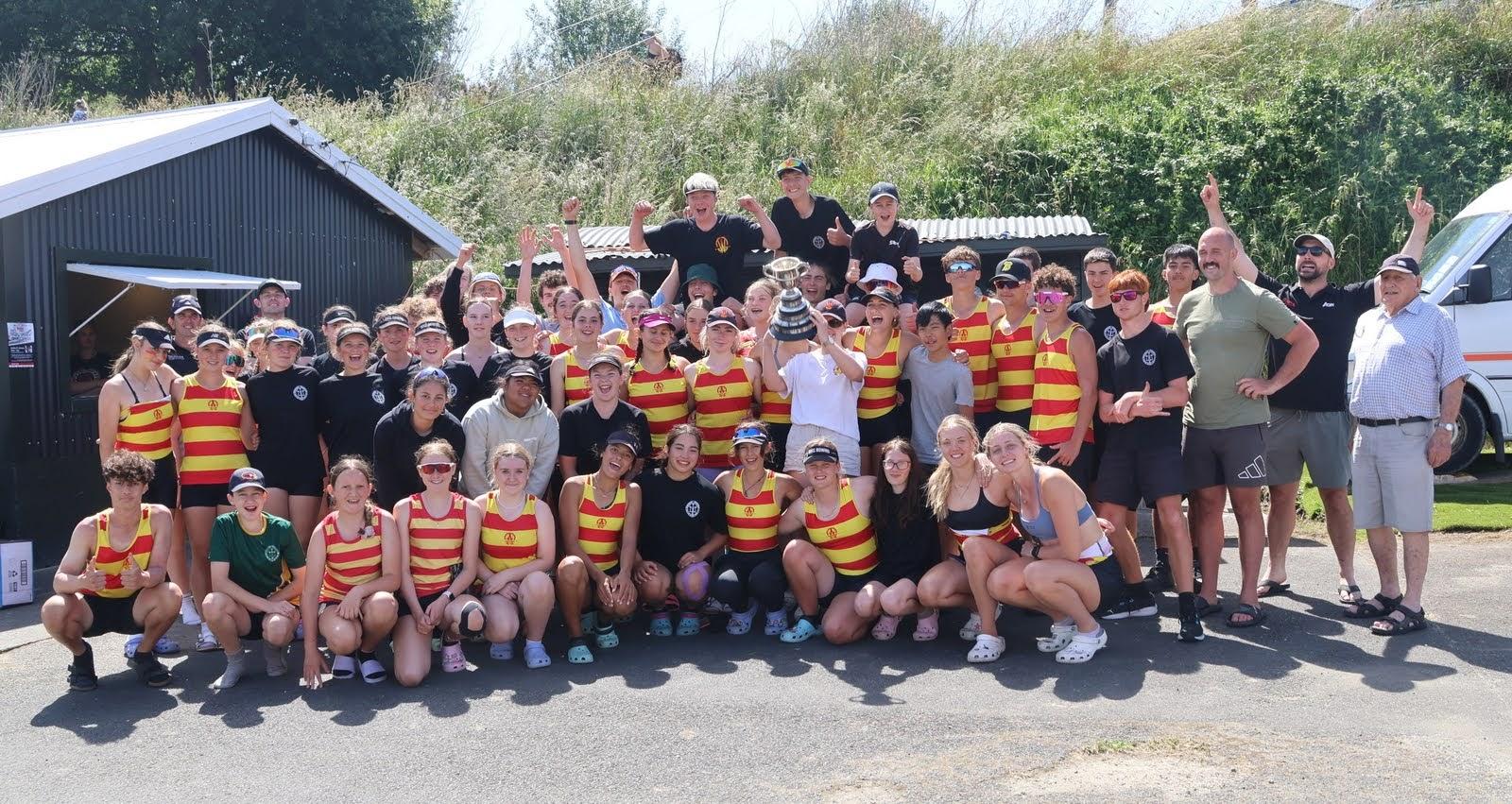
By Christmas 2024, Aramoho Whanganui had become one of New Zealand rowing’s standout regional programmes.
Its club and school squads were producing national results, developing depth and raising expectations. The athletes knew what good work looked like, and the programme had momentum worth protecting.
Christmas was where that momentum still leaked.
The normal structure loosened. Athletes travelled, family plans took over and training became something each person managed alone.
Most intended to keep moving.
January usually revealed who had.
The momentum was real. Christmas was where it still leaked.
The soft spot in a strong programme
Some athletes returned ready to progress. Others needed the first weeks of January to rebuild what they had lost.
The difference made early trials harder to run fairly and slowed the programme at the point when it wanted to start moving towards the national championships.
Axel Dickinson wanted the break to leave the squad stronger.
Aramoho turned the holiday period into a two-week team challenge.
Fifty-six athletes were divided across five teams, mixing novices, coxswains, club rowers and senior athletes.
They could earn points through rowing, erging, running, cycling, walking, swimming and other training.
The challenge gave the break structure without asking everyone to be in the same place.
Five teams and one shared target
Activity weightings helped compare different forms of training. Ability weightings gave athletes at every level a credible way to contribute.
The strongest rowers could still make a large impact. They just could not carry the entire challenge alone.
That changed the meaning of an ordinary holiday session.
A run completed away from Whanganui no longer disappeared into a private training diary. Once submitted, it moved a team score that everyone could see.
One person’s effort gave someone else a reason to train the next day.
The challenge connected athletes through a shared result, even while they were training in different towns, boats, gyms and holiday spots.
A holiday session stopped being private work. It became a contribution the whole team could see.
The buy-in, in numbers
For 14 days, the challenge kept the programme visible while the squad trained across different towns, boats, gyms and holiday spots.
The numbers showed the scale. The behaviour around them showed the culture.
Athletes encouraged one another in group chats, organised sessions and invited teammates down to the club. Mixed crews formed across age, gender and experience because everyone was contributing to the same competition.
Some athletes naturally took charge of their teams. Others surprised Axel by stepping forward to organise, encourage and lead without being formally appointed.
There were some serious efforts.
One athlete climbed Mt Taranaki, came back down and added another 20 kilometres that afternoon. Another went for a 50-kilometre ride because there were points available and a team waiting.
Most submissions were more ordinary: an erg, a short run, a walk, a mobility session or a piece of training squeezed around a family holiday.
Together, they kept the programme alive.
Axel described the atmosphere as healthy peer pressure and the rowing hub as “a hive of activity”. Athletes kept one another honest, but they also kept one another involved.
January began from higher ground
The strongest proof arrived after the leaderboard stopped.
Axel saw athletes return fitter than they had been before Christmas. Instead of spending January recovering the previous training block, the squad had a stronger platform to build from.
They also came back connected.
Athletes had spent the break encouraging teammates, watching the scores and contributing to something shared. The programme returned with competitive energy already in the room.
Early trials began with a smaller spread in fitness, and the squad could start moving forward sooner.
Axel believes the ability to hold fitness through Christmas has contributed meaningfully to Aramoho’s results over recent seasons.
The challenge did not create the successful programme. It protected the standards, relationships and momentum the programme had already built.
They came back with fitness to build on. The system came before the software
The system came before the software
Aramoho ran this challenge before the current ChallengeBuilder platform.
It relied on forms, uploaded evidence, formulas and a carefully managed spreadsheet. The competition worked. Running the machinery took effort.
ChallengeBuilder now makes the same format easier to manage.
Athletes upload their workout evidence. AI reads the activity and creates the submission. The leaderboard moves while the work is still fresh.
The organiser only steps in when something needs a human decision.
Aramoho had already proved the bigger idea.
A successful programme does not have to accept Christmas as lost time. Give the break a fair scoreboard and a shared reason to move, and it can send the squad back stronger.
Turn the break into a training block
Build a weighted team challenge that keeps your athletes connected, competing and ready to return stronger.