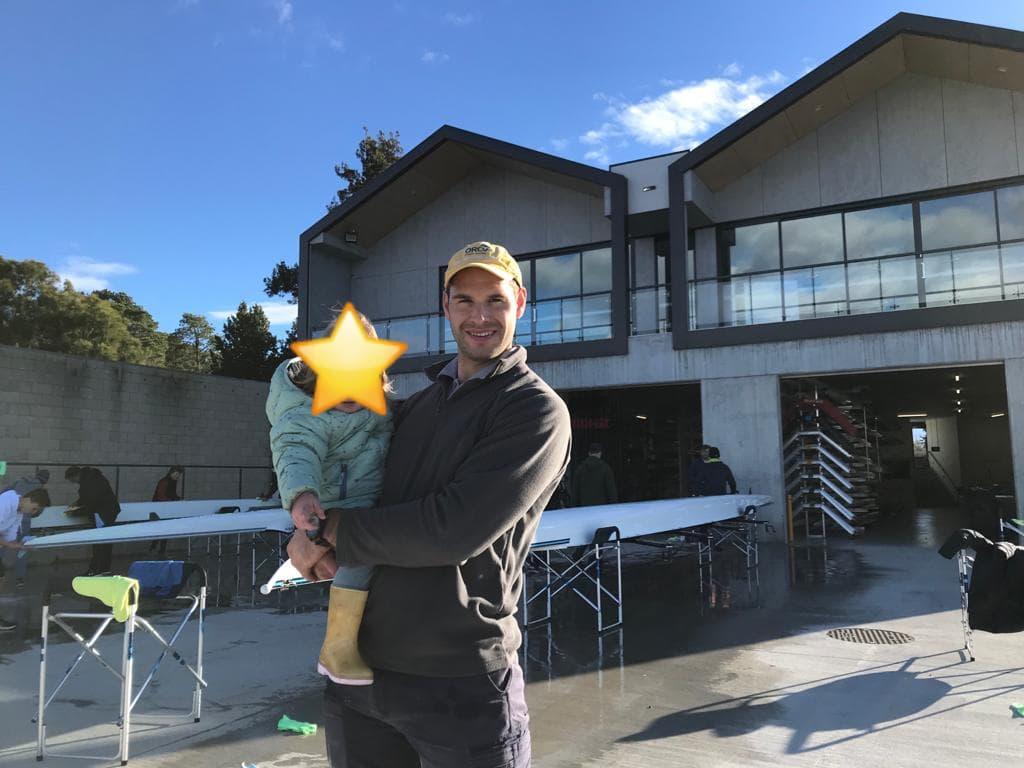
When Tobias Wehr-Candler was Head of Rowing at Canberra Grammar School, from October 2020 to May 2024, the summer break presented a recurring coaching problem. Students were away for eight weeks, then returned with trials and the national championships close behind.
Tobi was thinking about the whole programme: novices and senior rowers, boys and girls, students training at home and students travelling with their families. He wanted each of them to keep developing and to know their work still mattered to the group.
A school holiday training challenge can keep athletes connected by giving them one place to submit proof, follow progress and contribute to a shared result from wherever they train. It works best when the coach keeps that result alive through updates, recognition and smaller targets across the break.
Every student should be given the opportunity to be the best that they can be.
Why the summer break mattered
A leading athlete could set the pace. A younger rower could contribute through consistency. A student outside the top crews could still make a visible difference to the school total.
That mattered because Tobi’s idea of development extended beyond the athletes already winning selection. He saw previously inconsistent students continue training while away with family. Students encouraged one another in group chats and applied enough healthy peer pressure to keep teammates involved.
The shared score made their work easier to recognise. Students could see how their session changed the result and notice who else was helping the school move.
Eight weeks was too long to rely on launch-day excitement, so Tobi kept giving the challenge fresh points of attention. He used regular summaries, updates and smaller challenges to recognise consistent students, highlight different groups and show how recent submissions had changed the standings.
The information coming back gave him something current to coach from while students were spread across different locations.
His message remained consistent: “Let’s work together, let’s be the best we can be together.”
The leaderboard carried the activity across distance. Tobi’s communication gave that activity meaning.
One challenge across three schools
The challenge connected Canberra Grammar School, Redlands School in Sydney and Brentwood College School in Canada.
Tobi recalls more than 150 students taking part. Before the competition began, the schools met by video call and exchanged gifts between Australia and Canada. Students had a more personal connection to the people on the other side of the leaderboard.
The time difference added its own rhythm. Australian students could finish the day with their school in front, then wake to find Brentwood had added points while they slept. The same happened in reverse.
A run while travelling, an erg session at home or a strength workout in a local gym could all affect the same competition.
“It wasn’t built purely as a competition against the other schools, but a competition with the other schools.”
Give every student a role in the result
A leading athlete could set the pace. A younger rower could contribute through consistency. A student outside the top crews could still make a visible difference to the school total.
That mattered because Tobi’s idea of development extended beyond the athletes already winning selection. He saw previously inconsistent students continue training while away with family. Students encouraged one another in group chats and applied enough healthy peer pressure to keep teammates involved.
The shared score made their work easier to recognise. Students could see how their session changed the result and notice who else was helping the school move.
Eight weeks was too long to rely on launch-day excitement, so Tobi kept giving the challenge fresh points of attention. He used regular summaries, updates and smaller challenges to recognise consistent students, highlight different groups and show how recent submissions had changed the standings.
The information coming back gave him something current to coach from while students were spread across different locations.
His message remained consistent: “Let’s work together, let’s be the best we can be together.”
The leaderboard carried the activity across distance. Tobi’s communication gave that activity meaning.
What other coaches can take from Tobi’s approach
A holiday challenge should reflect the programme you are trying to build. Before launching one, ask whether athletes can contribute with the equipment available, whether each submission affects something larger than the individual, and whether developing athletes can influence the result alongside the strongest performers. Then think about the competition itself. Is there something worth chasing? Will the score stay relevant? Who is responsible for turning what happens on the leaderboard into recognition, encouragement or a new target? Tobi’s rules, scoring and communication all served the same idea: every student needed a practical way to train and a visible way to contribute.
How ChallengeBuilder supports an inter-school challenge
ChallengeBuilder brings this structure into one platform. Students can submit workout proof from wherever they train, while individual, group and school leaderboards update as approved activities are scored.
Coaches can include different activities, create school teams and set rules that match the purpose of the challenge. As explored in The workout screenshot is the new fitness receipt, workout proof becomes an organised submission rather than disappearing into a group chat.
The platform gives a dispersed group one shared result they can still move together. The coach still decides what deserves attention, who gets recognised and how the story develops.
Tobi wanted each student to have an opportunity to develop and a meaningful role in the programme. By connecting three schools through one holiday challenge, he gave them a reason to keep training and a result they could move together.
Connect your programme across the school holidays
Run an inter-school challenge with workout proof, flexible activities and live school leaderboards.